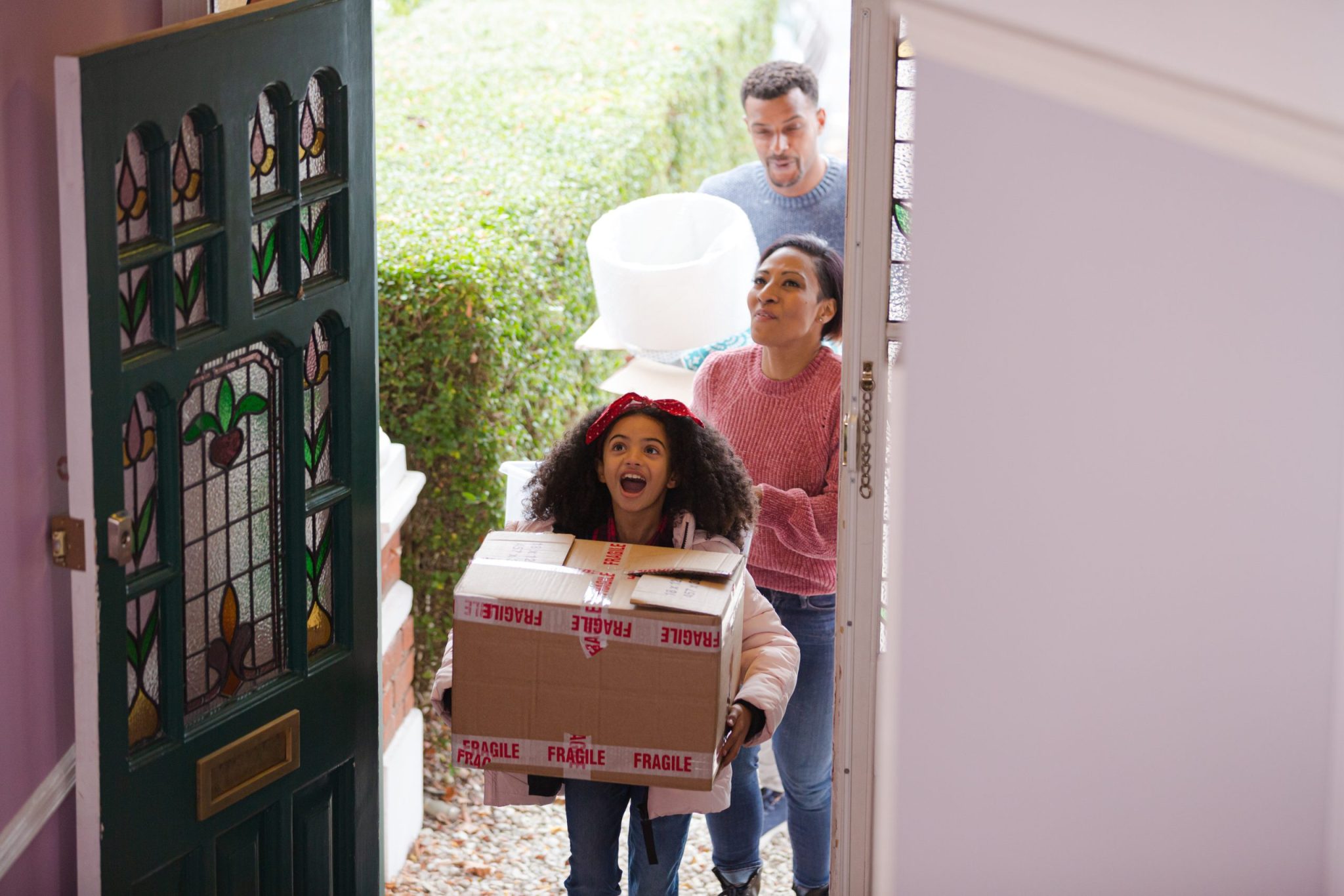
The usual way to go about moving house is to accept an offer on your existing property, get a mortgage-in-principle, and then, armed with the knowledge of how much your home will sell for and how much you can borrow, you put an offer on a property you like. There’s nothing stopping you from making an offer on a house before you’ve sold your old home. You just need to make sure that the sellers take your offer seriously.
The usual way to go about moving house is to accept an offer on your existing property, get a mortgage-in-principle, and then, armed with the knowledge of how much your home will sell for and how much you can borrow, you put an offer on a property you like.But sometimes that’s not always the best way to move home. Perhaps you’ve already found your dream home and you don’t want someone else to snap it up. Perhaps you need to relocate quickly. Or perhaps your dream home needs renovation before you can move in.For whatever reason, you need to buy a house before selling yours. Here’s how to do it.
Can I Make an Offer on a House Before I’ve Sold Mine?
Yes. There’s nothing stopping you from making an offer on a house before you’ve sold your old home. You just need to make sure that the sellers take your offer seriously.Many sellers will expect you to have accepted an offer on your old home before you make an offer of your own. If they find out that you haven’t accepted an offer, they may fear that you will hold up the chain and delay the transaction.So it’s worth telling the estate agent that you’re in a position to complete the purchase without selling your home. This could include providing information about your solicitor. You’ll also need to outline how you’ll finance the purchase, which could either be from personal savings or, more likely, a bridging loan.
What is a Bridging Loan and How Do I Get One?
A bridging loan is a short-term loan that can help you access the money you need to buy a new property before you’ve sold your old home.Bridging loans bridge the gap between the purchase of your new home and the sale of your old, hence the name. These loans are designed to be paid back in a short period of time, usually up to 12 months. They’re also offered on an interest-only basis, and so those interest rates are high: anywhere from 6% to 20%.Bridging loans are often used by people who are:
buying a new home before they’ve sold their old home
buying a property that can’t be bought with a traditional mortgage
buying a property at auction and can’t quickly raise the funds needed
How to Take Out a Bridging Loan
To take out a bridging loan, you’ll likely need a heft deposit, as high as 25%. You’ll also need good credit, so that the lender can be sure that you’ll pay back the loan.The lender will also want details as to how you’ll pay back the loan. In your case, this is likely the sale of your old home. Your old home will also act as a security (i.e. the lender can repossess the property if you don’t repay your loan). Your lender will want information about it, such as a valuation, to both assess it as security for your loan but also to assess your plan to repay the loan.The lender will also need information about your new property. It represents an asset, but the lender will also want to make sure it has no serious issues that will cause you financial issues that might affect your ability to repay your loan.
What Are the Tax Implications of Buying a House Before Selling?
There are plenty of costs involved in buying a new home, both big and small. And there’s no getting around it: buying a house before you’ve sold your old home adds an extra cost to the list in the form of Stamp Duty Land Tax (SDLT) and Capital Gains Tax (CGT).
Stamp Duty
Stamp Duty is paid on all properties valued at over £125,000, and the amount to be paid increases with the value of the property. You’ll need to pay Stamp Duty on your new home no matter how you buy it. But, if you choose to buy it before you sell your old home, you’ll have to pay more. That’s because an extra 3% of Stamp Duty is due on second homes. And you will have a second home, even if it’s just for a short period of time.The good news is that you only have to shoulder this extra cost for a short period of time, too. Once you’ve sold your property, you can apply for a refund of the extra Stamp Duty you paid. You’ll need to submit this request for a refund within a year of selling your old home, or within a year of the date your Stamp Duty return was filed, whichever is later.HMRC must have your request within 12 months of the sale of that previous main residence, or within 12 months of the filing date of the return relating to the new residence, whichever is later.
Capital Gains Tax
Capital Gains Tax is paid on the increase in the value of the property you own; a tax on the gains in your capital. You only pay Capital Gains Tax if you own two properties, which you will do when you buy your new home before selling your old.That means that, when you come to sell your old home, you’ll pay this tax on how much the value of the old property has increased since you bought it. This tax is not refundable, so it will reduce the amount of money you’ll make from the sale of your home.The amount of Capital Gains Tax you would have to pay depends on a number of factors, but it can vary between 10% and 28% of the amount your property value has increased by.
Should You Buy a House Before Selling Yours?
There are benefits to buying your new home first but, as with all things, you need to balance them against the downsides.
Benefits to Buying Your Home Before Selling
You won’t miss out: Perhaps the biggest benefit is that you won’t miss out on your dream home. Rather than waiting for an offer on your current property, you can put in your offer as soon as you find the right house. And your offer is more likely to be accepted, too, as the transaction won’t be dependent on any chain behind you.You can take your time: It also removes any time pressure on your house hunt. Once you’ve accepted an offer on your property, you’ll be under pressure to find your home so that the chain can get moving. By removing yourself from the chain, you can take as much time as you want. After all, this will be your new home; it’s not something to rush!You might get a better offer on your old home: Because your new home purchase isn’t part of a chain, you can afford to be picky about offers. Rather than being forced to accept a lower offer to keep the chain intact, you can be patient and negotiate a better offer.You can move on your timetable: Removing yourself from a complicated property chain means you won’t be carefully juggling moving dates or, failing that, paying for temporary accommodation and storage. You can simply move into your new home when you’re ready!
Also, you may wish to read our article on whether to sell your house or rent it out.
Downsides to Buying Your Home Before Selling
That said, there are some downsides to buying a home before selling your old one. And most of them are financial.Less certainty: Because you haven’t had an offer on your old home, you won’t know how much you’ll get from the sale. You’ll have an idea, of course, and a good estate agent will be able to give you a reliable estimate (and, hopefully, get you in excess of your asking price!) But there are no guarantees, which means there’ll be some uncertainty that your old house will sell for enough to help finance your new home.Money concerns: Speaking of finance, you’ll need to arrange some in order to make your purchase. This will often take the form of a bridging loan, which comes with its own set of paperwork and interest rates and fees.You’ll pay more tax: You’ll need to pay Stamp Duty Land Tax (SDLT) on the new property and Capital Gains Tax (CGT) when you sell your old home. While the former can be reclaimed, it’s still an out-of-pocket expense at the time, and the CGT can’t be claimed back at all.
Making the Right Decision
Selling your old house before you buy a new property is the most common path to moving home. But there are plenty of benefits to buying first. If you can secure the bridging loan and the benefits outweigh the extra costs, it might be the best way to secure your dream home.However you decide to sell your old property and buy your next, you’ll want expert advice and intimate local insights to help you get the most for your old home and to find the right property for you. We’ve helped over 30,000 customers along their property journey, and we secured 99% of the asking price on average in 2021.Speak to our team today to find out how we can guide you towards the property journey that’s right for you.
Share
Get in touch
Got a question, general enquiry or something else?